AI Is My Org Chart
No release team, but everything a release team guarantees: two Android apps, one developer, and checks built with AI.
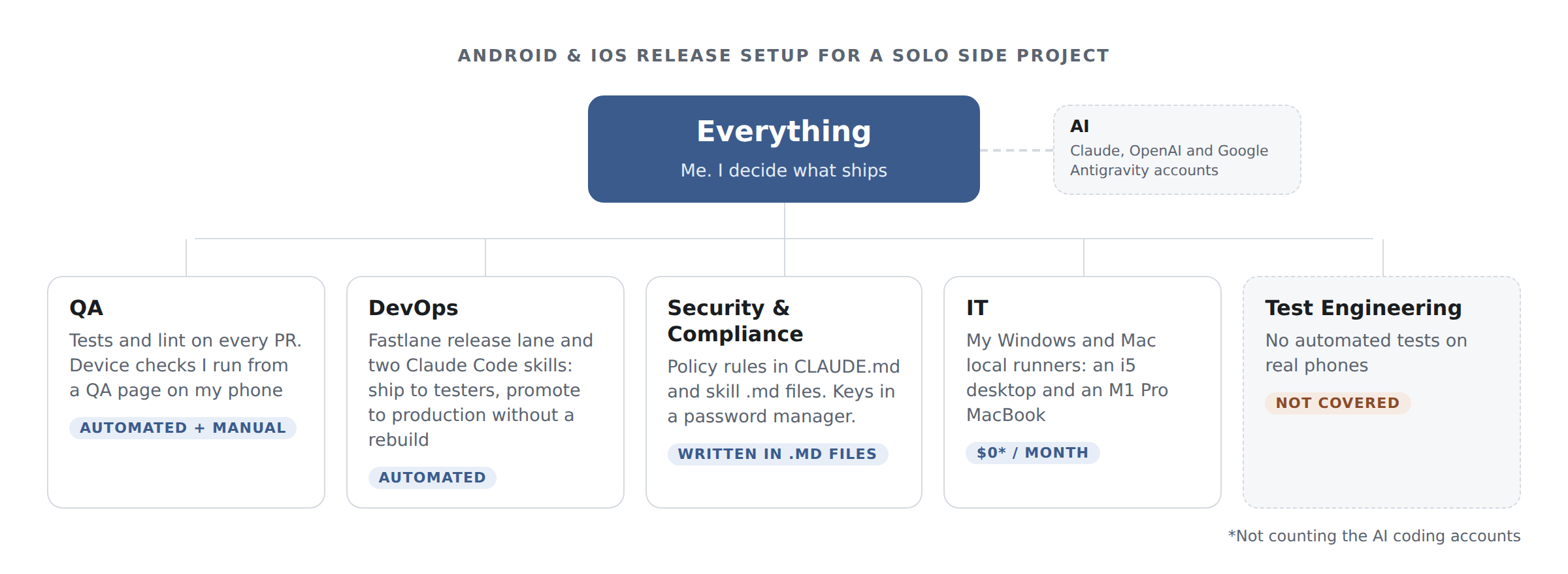
I ship two Android apps by myself. Driftwell, a sleep app that plays affirmations over generated tones all night, is on Google Play. RuckPace, a pace coach for rucking, is with testers. Both are side projects under my own LLC.
A company that ships apps has whole departments for release engineering, DevOps, security, QA, design and marketing. I don’t. I have five AI subscriptions, and with them I built the part of each department’s job that one person shipping two apps can’t skip.
How to read the chart. None of these is a whole department. Each box is the slice of that job I needed, and each section ends with ideas for skills that would cover more of it. A dark chip like /fix-raw-bugs is a skill you can install. A light chip is something Claude built for my setup, so I give the prompt instead.
Release Engineering
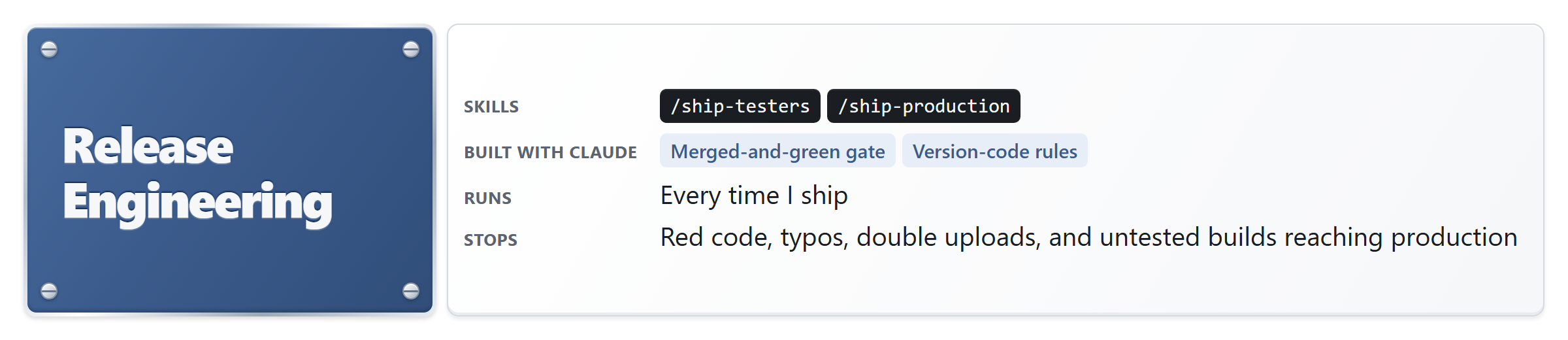
This is the department I care most about, because it’s where a mistake reaches a stranger’s phone. Both apps ship through ship_android, one Fastlane plugin they pin by tag, so a fix to one app’s release is a fix to both. I never type the Fastlane command. /ship-testers shows me the app, the commit and the exact release notes, then asks before anything uploads.
- Only green code ships. HEAD has to be the tip of main, and every CI check on it has to have passed. No checks is a refusal too.
- A typo never ships. Unknown options abort first, so a misspelled
dry_runcan’t publish while I think I’m rehearsing. - Nothing uploads twice. Once Play has the build, nothing after it can fail the ship and tempt a rerun.
- Production gets what testers had.
/ship-productionpromotes the tagged tester build unchanged and refuses diagnostics builds and emergency bypasses. Firebase Test Lab on five phones is next, built on a branch.
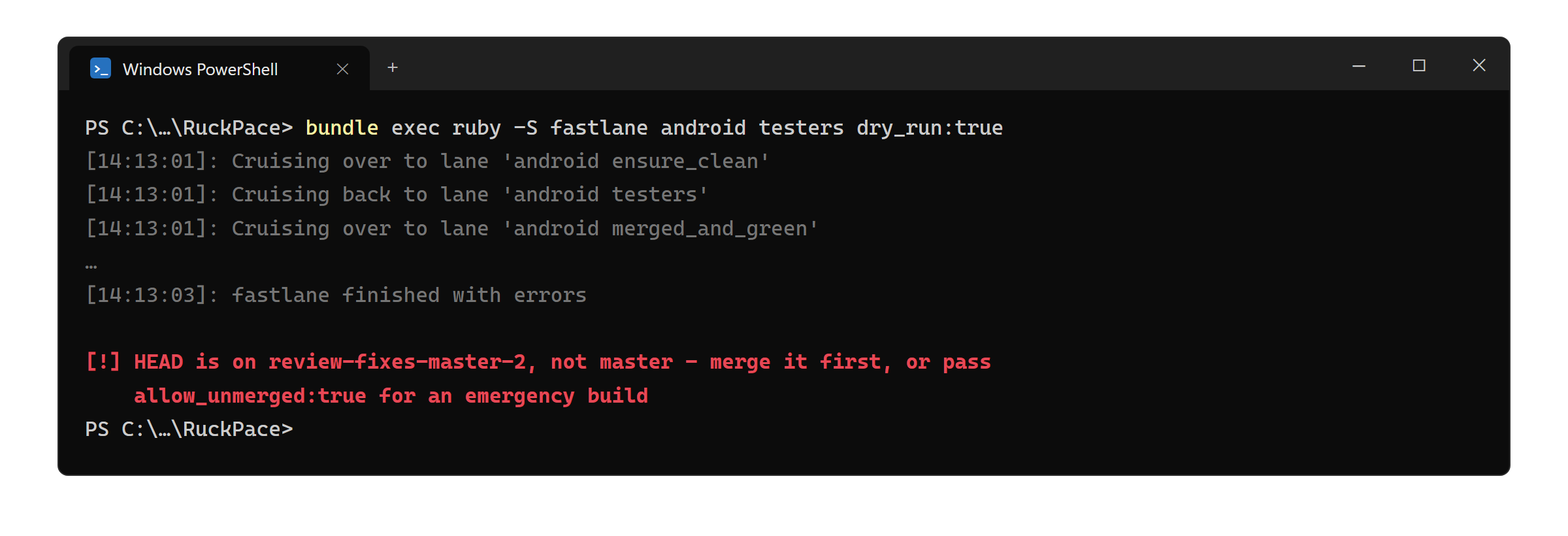 The gate refusing a real RuckPace branch, with the bypass right there in the message.
Both skills and the lane are open source:
/plugin marketplace add frictionlesscode/claude-plugins/plugin install ship-android@frictionlesscodeDevOps
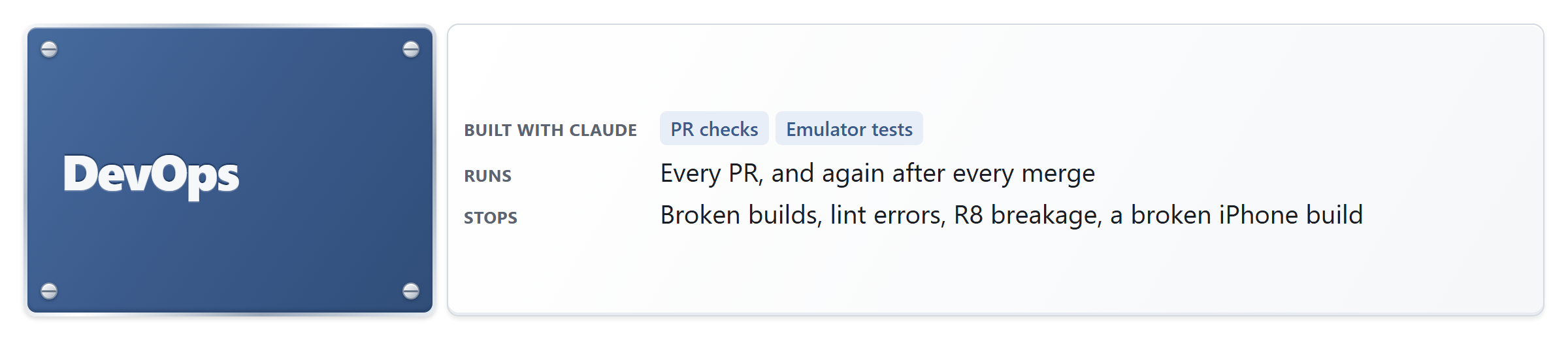
Every PR runs the Android build, unit tests, lint, screenshot checks and an R8 shrink, and the Mac builds the iPhone app. After a merge, Driftwell’s emulator tests put playback through a phone call, unplugged headphones and deep power saving.
If CI shares a machine with Android Studio, give the CI emulator its own port and skip the Actions cache. A self-hosted runner keeps its Gradle home, and restoring a cache over it cost 12 minutes a run.
Set up GitHub Actions for this Android app on my self-hosted runners. On every PR: build, unittests, lint, screenshot checks and an R8 release shrink. After a merge: emulator tests on aport other than 5554, with ANDROID_SERIAL pinned. Don't use the Gradle Actions cache.Infrastructure
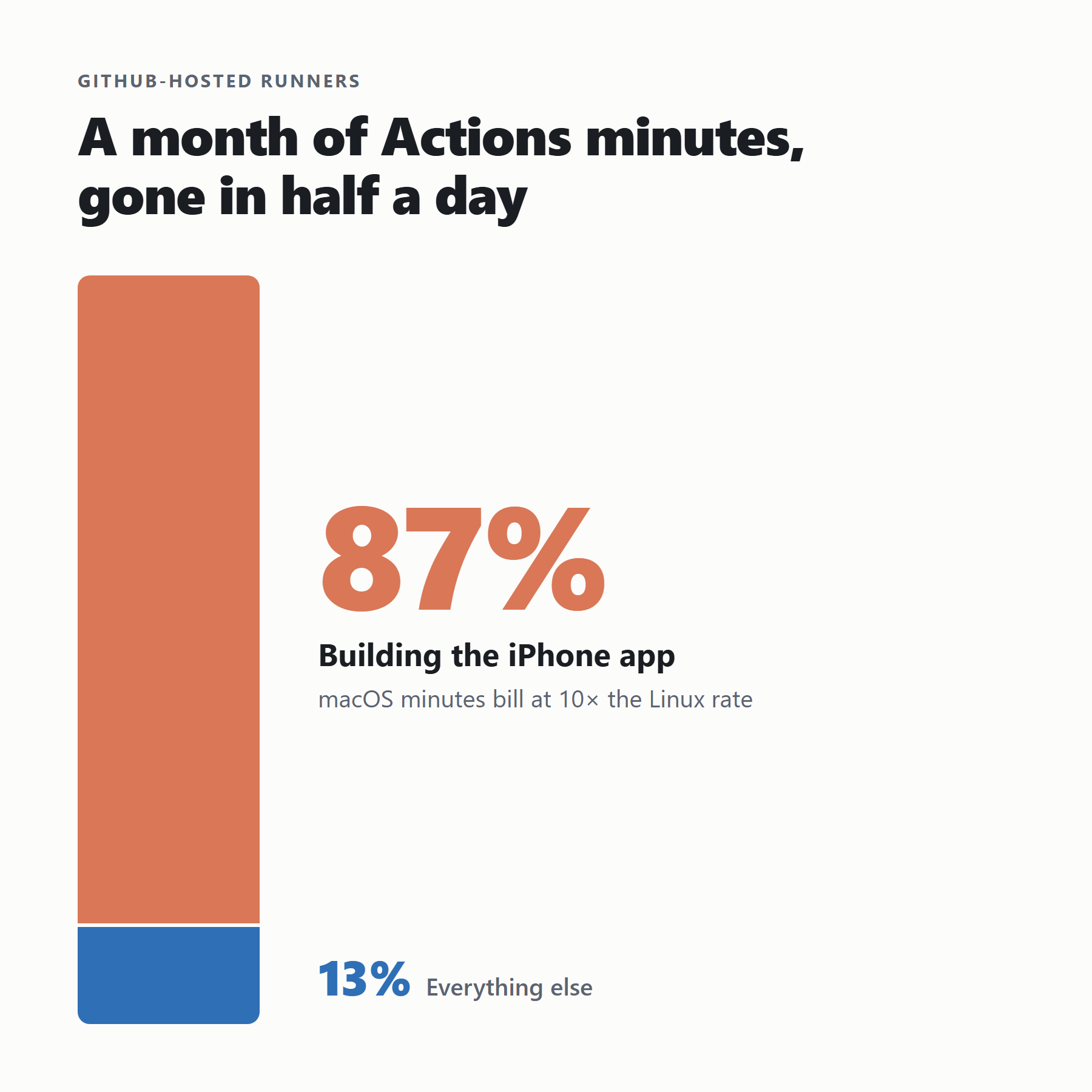
On GitHub-hosted runners, a couple of pull requests used up my whole month of Actions minutes in half a day. The macOS job, billed at ten times the Linux rate, was 87% of it.
So Claude moved CI onto machines I already owned, as self-hosted runners GitHub doesn’t bill for: Windows and a Linux container on an i5 server, and macOS on an M1 MacBook it set up over SSH. Keep those repos private, because on a public repo anyone’s pull request can run code on your machine.
Move this repo's GitHub Actions jobs to self-hosted runners on machines I own. Windows jobs onthis server, Linux jobs in a Docker container here, and a macOS runner on my Mac over SSH.Label each runner, update the workflows, and show me one green run on each.That bill set the rule for the whole chart: nothing that runs on every change should cost money each time it runs, Actions minutes or AI tokens. Next up here: moving the runners off my user account, which today can read the release keys.
Security
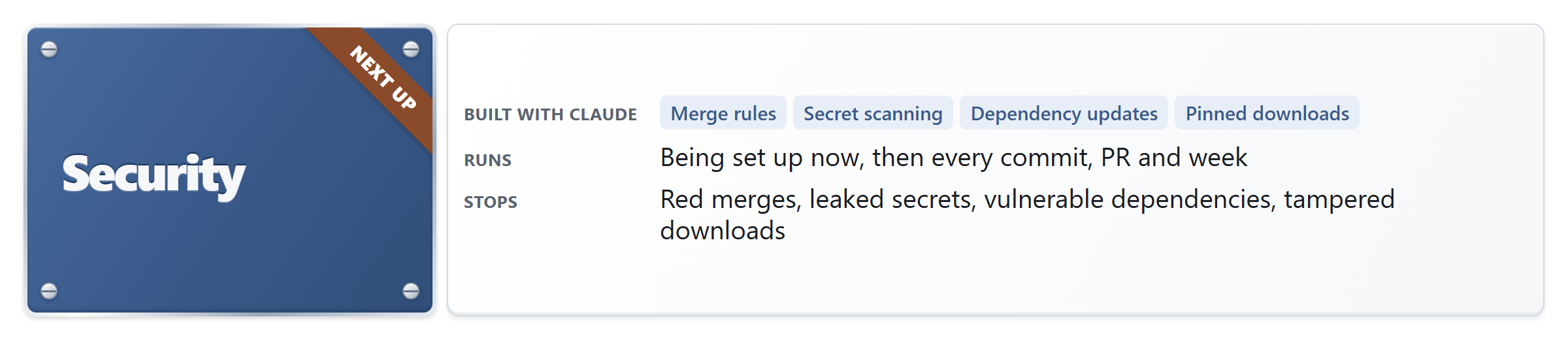
Security is the department I’m staffing right now. None of it is live yet. The plan is to make the pipeline enforce it:
- Nothing reaches main red, including from me: a ruleset with no admin bypass.
- CI can’t read the release keys: runners under a locked-down user.
- Secrets never leave the machine: gitleaks before every commit and in CI.
- Vulnerable dependencies show up as PRs: Dependabot, grouped weekly.
- What CI downloads is what I reviewed: Actions pinned to SHAs, downloads to checksums.
Each one gets broken on purpose once before I count it.
Lock down this repo. A ruleset that requires a PR and passing checks, with no admin bypass.gitleaks as a pre-commit hook and as a CI job. Weekly Dependabot, grouped. Every Action pinnedto a commit SHA and the Gradle wrapper to a checksum. Then break each guard once on a branchand show me it failing.Compliance
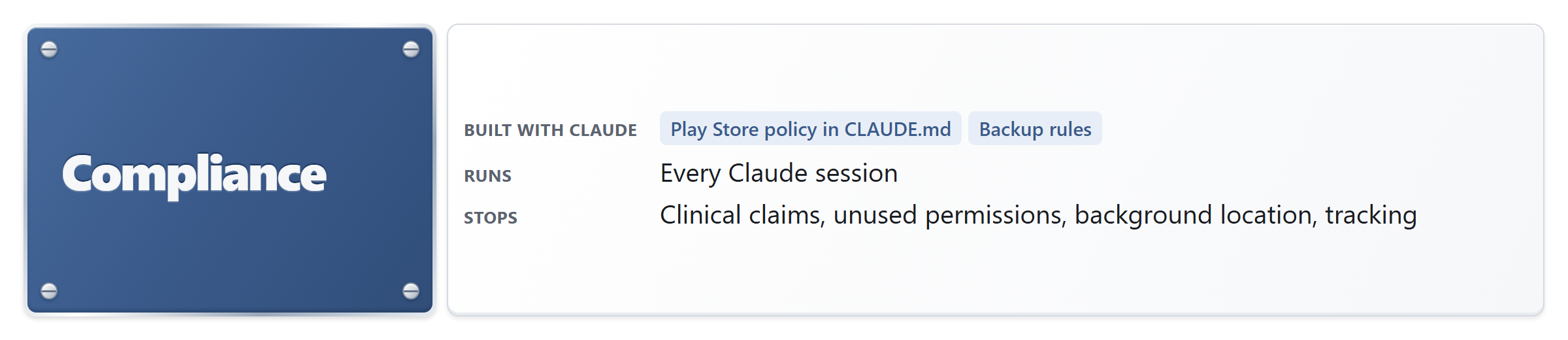
Most of the code is written with Claude, so Play Store policy lives in CLAUDE.md, where Claude reads it every session:
- No clinical claims, in an app with affirmations for anxiety and addiction.
- No permission without the feature that needs it, and never background location.
- No analytics or crash SDKs, so the Data Safety form is short and true.
- Backup rules keep the user’s affirmations out of their cloud backup.
Add a Play policy section to CLAUDE.md for this app: no medical claims, no permission withoutthe feature that uses it, no background location, no analytics or crash SDKs. Add backup rulesthat keep the user's personal content out of their cloud backup, and prove it with a backupand restore on the emulator.Test Automation and QA
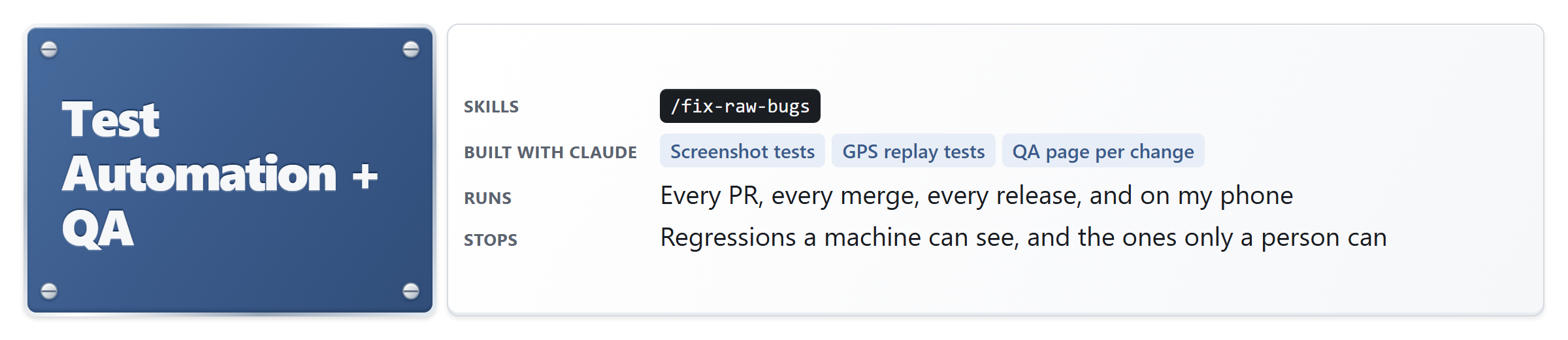
Test automation asks whether anything broke: every screen drawn on five setups, real rucks replayed from their GPS logs, and the emulator tests. QA asks whether the build is good, which still needs a person. Claude writes a QA page per change that I work through on my phone, and /fix-raw-bugs turns tester reports into triaged fixes.

Every test, with its prompt, is in AI Flattened the Testing Pyramid.
Design
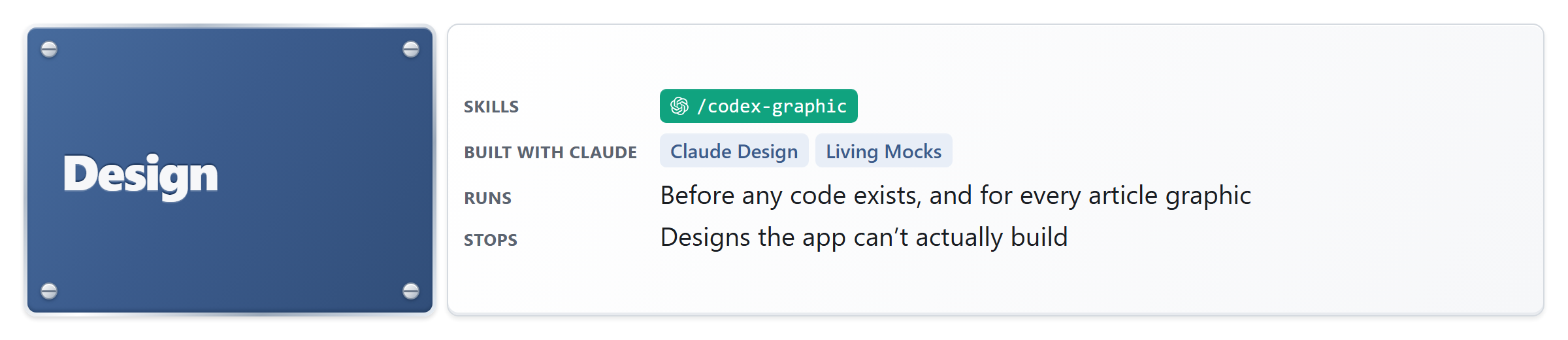
Design happens before code. Claude builds Living Mocks, HTML screens made from the app’s own colors, fonts and components, so every design decision is one the app can actually build. That loop is in How Claude Can Get Product, UX and Engineering to Stop Arguing.
Article graphics go to OpenAI. /codex-graphic has Claude write the brief, hand it to the Codex CLI on my ChatGPT plan, and check every word that comes back. It made the hero, the nameplates and the Support illustration below.
Marketing

Claude wrote both Play Store listings from the code, not from memory: descriptions, screenshots, the feature graphic, the Data Safety answers and the privacy policy. /product-video made this RuckPace tour from emulator recordings with Remotion and FFmpeg:
/write-article drafted this article, and /medium-sync cross-posts it to Medium.
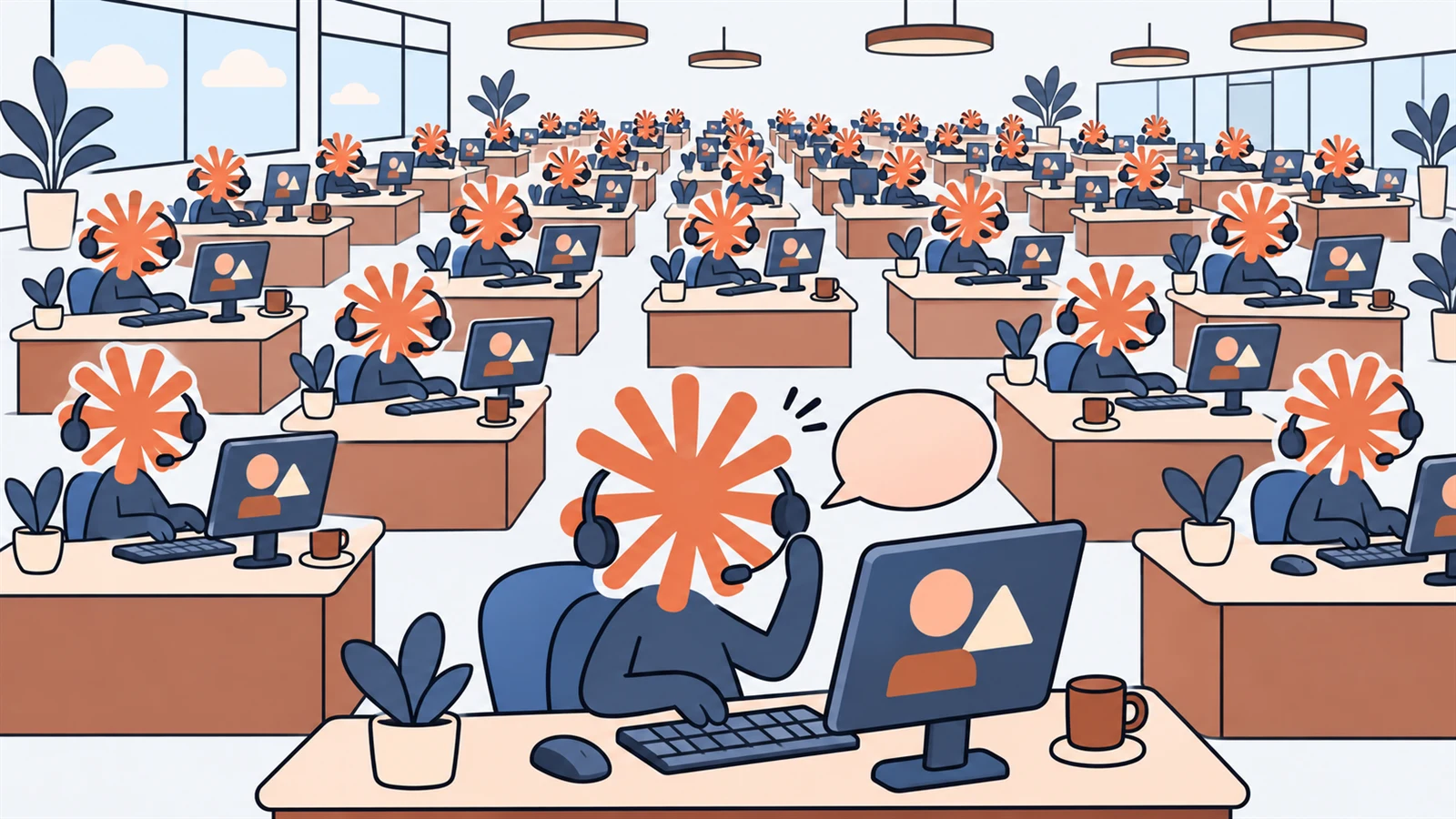
Open headcount: Support
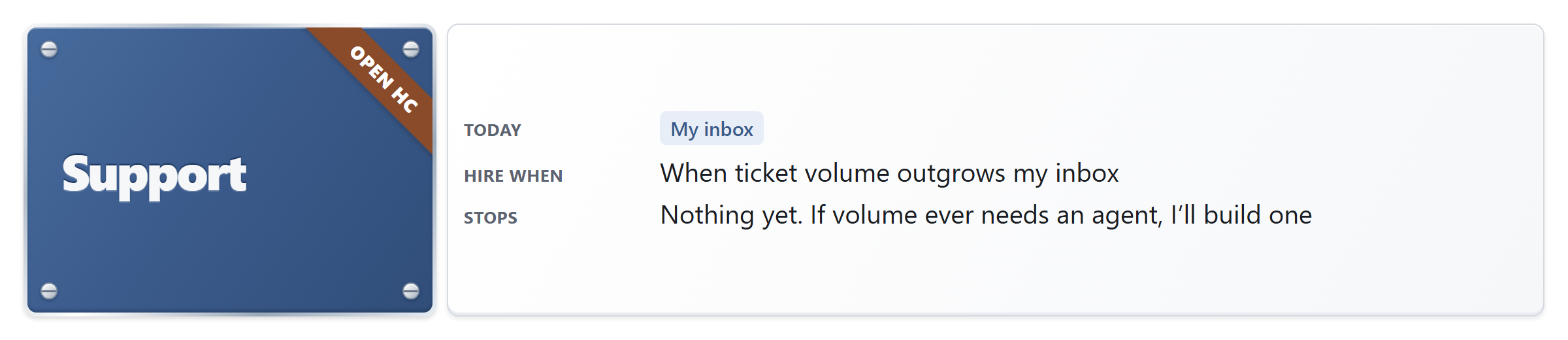
Support is my inbox. Hopefully ticket volume never needs an agent.
Summary
Being a solo developer used to mean taking shortcuts, because the checks a release team runs took a team. That’s not true anymore.
A department provides guarantees: nothing ships red, no secret leaks, every release gets a real check. Scale those with people and process instead of automation, and every handoff adds a wait and someone catching up on what they missed. Those two taxes, coordination and context, grow with every person you add.
With AI building the gates once, I keep every guarantee and still make the call on what ships. Every department should look at what it can automate or hand to an agent: fewer handoffs, shorter delays, and room to scale with demand rather than headcount.